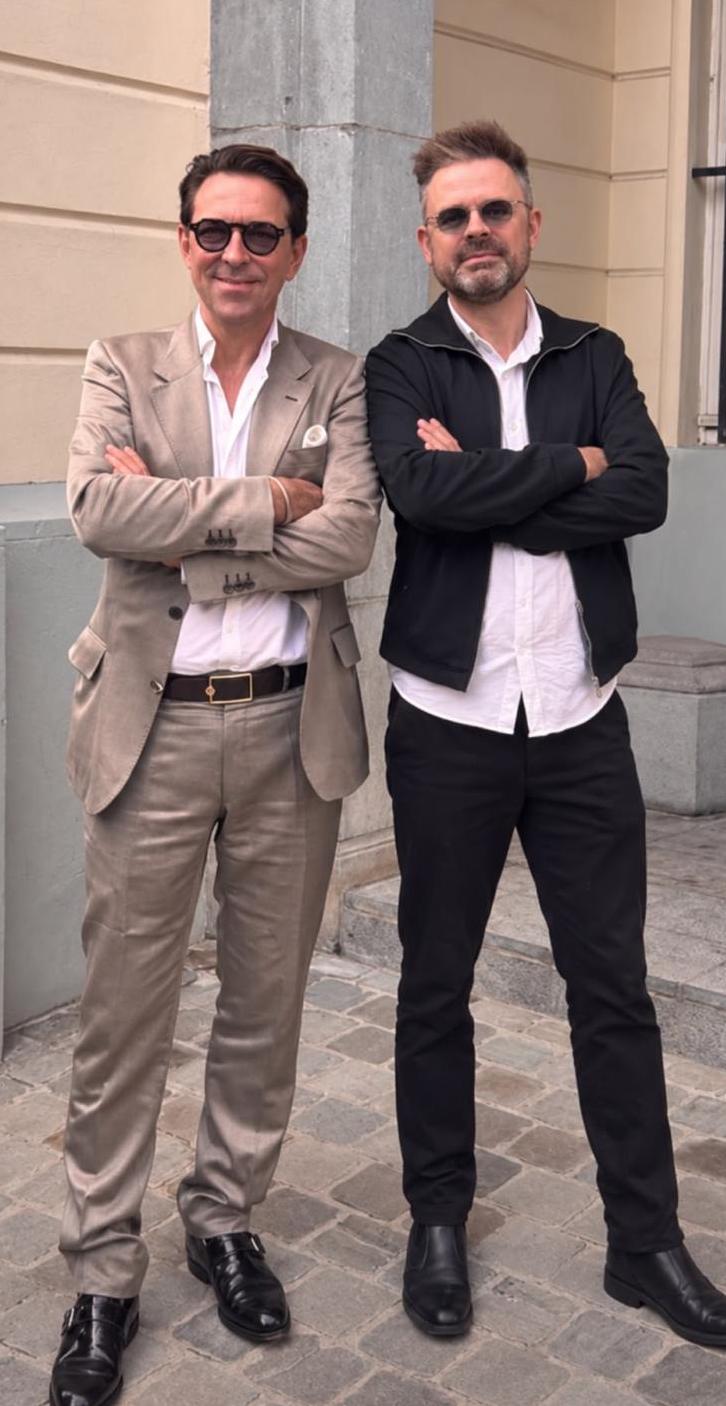
There is something rather paradoxical about the path taken by Sébastien Boussois. A doctor of political science, a Middle East specialist and long associated with the left, he now finds himself at the helm of Pan, the historic title of the Belgian satirical press, better known for leaning precisely the other way. Recruited by the whirlwind John-Alexander Bogaerts, owner of the paper, he owns that balancing act — one that, evidently, does not scare him.
Editor-in-chief for only a few months now, he intends to wake the paper up, give it fresh momentum and, above all, extend its playing field to France. A meeting with a man who, since arriving in Brussels in 2007, has never stopped moving between politics, media and culture.
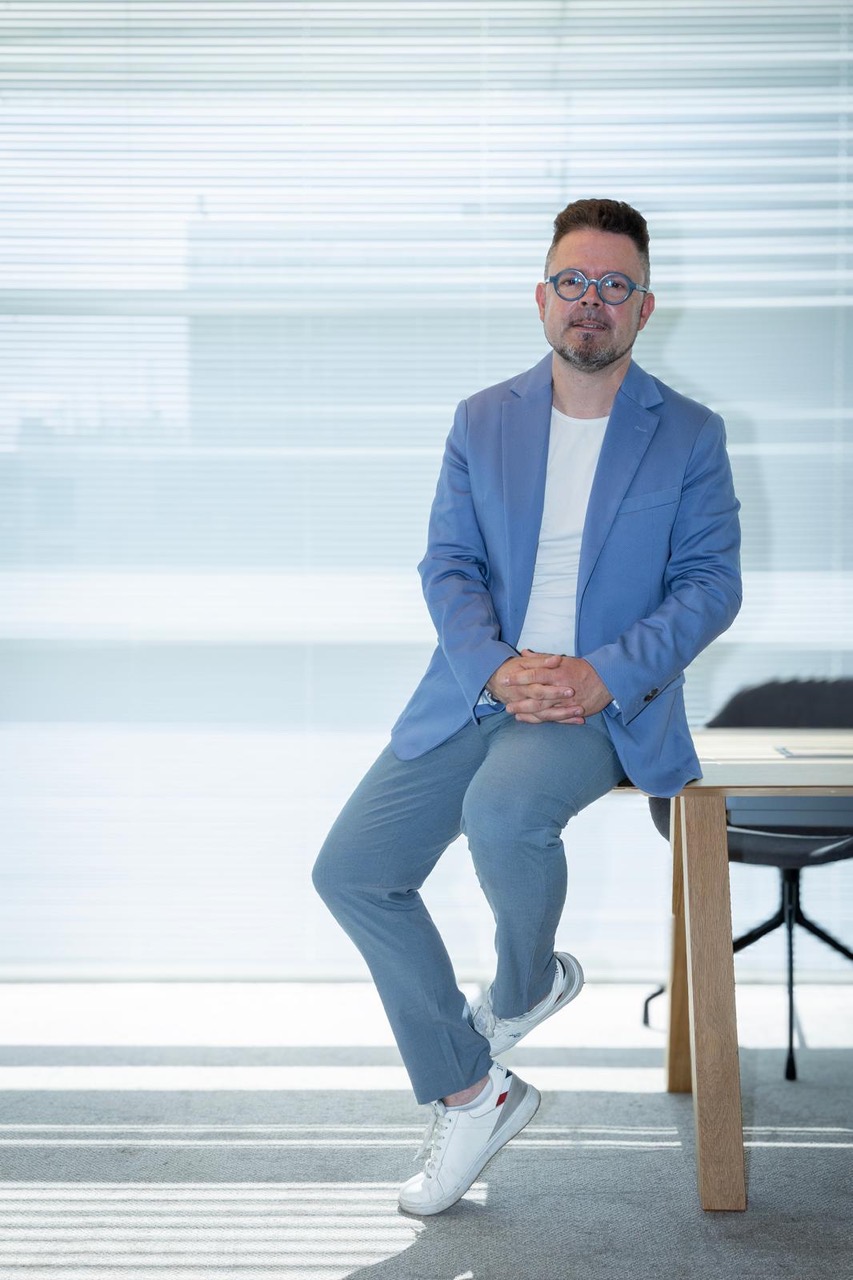
“Too conservative. And not necessarily very well preserved.”
When I bring up Pan, I first mention the impression of a paper that has settled into its habits. His answer is instant: “Too conservative. And not necessarily very well preserved.”
The verdict may sound harsh, but his arrival in the newsroom is more of a gamble. At a time when the print press is looking for new models, Boussois wants to bring movement back to a title founded in 1945.
His editorial ambition is clear: “We want to be the right-wing maverick.” An openly stated line, critical of progressivism and wokeism, which, in his view, is not just about opposing mainstream media. Above all, he wants to offer a different reading of the news.
“Objectivity in journalism, for me, is total nonsense”
Sébastien Boussois has little faith in the idea of a perfectly neutral journalism.
“Objectivity in journalism, for me, is total nonsense. It makes no sense.”
For him, major newspapers have always carried sensibilities and editorial lines. What has changed is the fragmentation of the media landscape and the emergence of a multitude of new voices.
He takes a nuanced view of traditional media. Their loss of credibility, he says, is not only linked to editorial choices but also to shrinking resources and a reduced capacity to investigate on the ground.
Pan intends to occupy this space with a different voice, without claiming to replace the courts. For Boussois, investigative journalism is essential, but it must not become “trial by media”.
Paper, in the age of social networks
The paradox is obvious: taking the helm of a print paper at a time when information travels at the speed of social media.
And yet Boussois defends paper. “A print newspaper has the merit of being physically there, in the archives and in memory.”
But he also knows the future is digital. Pan already has a significant community on Facebook, and some stories really resonate. The goal now is to structure that presence and develop the website, search visibility and social media.
He speaks of an “urgent communication and information rearmament”. A phrase that sums up the challenge: keeping the strength of a weekly while learning to exist in real time.
“Belgians must let go”
This is perhaps the most symbolic change.
Pan no longer wants to think of itself solely as a Belgian paper. On his arrival, Boussois had the title’s tagline changed: from “Belgian newspaper since 1945”, Pan became “French-language newspaper since 1945”.
The reason is simple: the Belgian market is small, and the debates the paper covers reach far beyond the country’s borders.
“I would like to have three or four points of sale in Paris,” he explains.
So for him this is not about leaving Brussels, but about considerably widening Pan’s playing field. France becomes a new development prospect, with stories and bylines able to reach a wider audience.
French by birth, now a naturalised Belgian, settled in Brussels since 2007 and a former postdoctoral researcher at ULB, Boussois naturally has this dual perspective.
Brussels, Paris and a new chapter for Pan
His view of Belgium has evolved, though. After nearly twenty years in Brussels, he is now very critical about the country’s future and believes some cultural and political battles will be fought more in France.
“I think I would rather go and fight in France,” he says.
In the context of our conversation, the phrase does not mean he wants to leave Brussels. It makes most sense when he talks about Pan: he wants to give the title the means to go beyond its historic market and find new readers across the border.
One question remains: with what resources?
In the end, this is the question that accompanies all of Boussois’s ambitions.
He took the helm of Pan about three months ago with plenty of ideas, a digital strategy, the wish to develop the Club de Pan, strengthen social media and bring the title to life beyond its traditional readership.
But an editorial strategy is not enough. Resources are needed for distribution, digital, search visibility, communication and commercial development.
Will Pan’s board and management be ready to give him the resources needed to turn this ambition into reality?
That is probably one of the keys to what comes next.
Because Sébastien Boussois did not join Pan simply to accompany a historic title. He wants to give it new energy, widen its audience and attempt a new French-language adventure.
The bet is bold. But three months after his arrival, it is still too early to know how far this new momentum can take Pan.
One thing is certain: the new editor-in-chief has already reconnected the title with an ambition that reaches far beyond Belgium’s borders.
🔗 Sources & verifiable links
- Radio Judaïca — « Sébastien Boussois est le nouveau rédacteur en chef de l’hebdomadaire satirique belge Pan » (8 juin 2026)
- La Tribune des Nations — author page of Sébastien Boussois
- Le360 — « Parution Maroc : “La force de la stabilité” de Sébastien Boussois ou l’art de durer »
- Valeurs actuelles — « Tribune : la révolution affective ou le désastre d’un monde qui ne sait plus aimer »
- 21News — « Fatima Ezzahra El Mansouri : “C’est un moment historique, car c’est la première fois qu’une femme est nommée à la tête d’un gouvernement au Maroc” »