Brussels’ Royal Palace: 300 years of history, and a King at work every day
From the Palace of the Dukes of Brabant, which went up in smoke in 1731, to its summer 2026 reopening: the history of Brussels' most formal landmark.
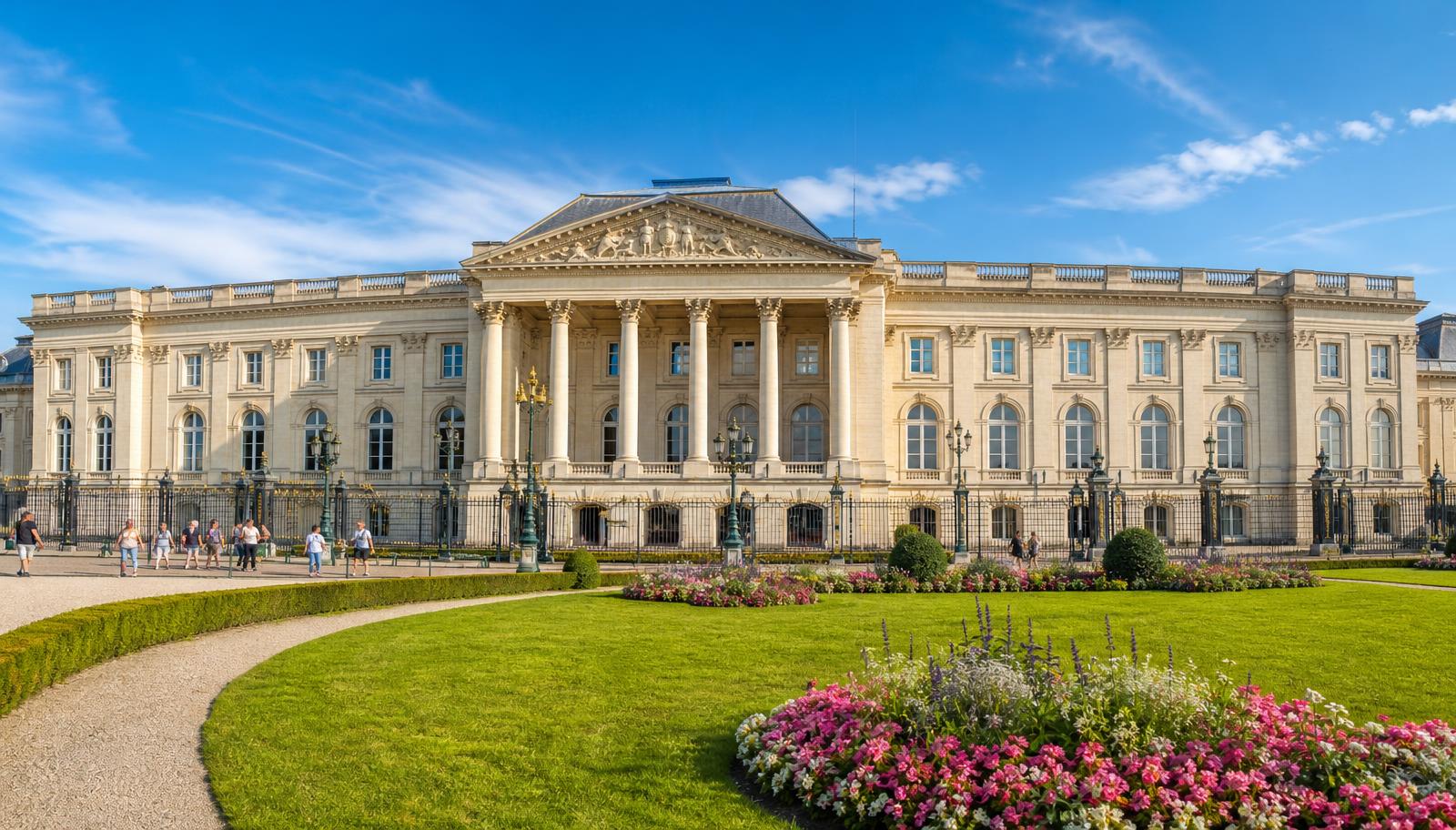
Some buildings you walk past every day but never set foot inside. The Royal Palace of Brussels on Place des Palais is the undisputed champion in this category. This summer, until 16 August 2026, its gates are open to the public — following major renovation works. It’s the perfect opportunity to delve into the stories its facade has to tell.
3 February 1731: The night Brussels lost its palace
Before this palace, there was another, and it was one of the most magnificent in Europe: the Coudenberg Palace. It had been the residence of the Dukes of Brabant since the 12th century, expanded first by the Burgundians — the Aula Magna was built there between 1452 and 1460 — and later by Emperor Charles V himself. Its apartments were adorned with works by Titian, Rubens, and Brueghel.
On the night of 3 February 1731, the Governor-General of the Netherlands, Maria Elisabeth of Austria, returned to her apartments exhausted and neglected to have the candles and braziers extinguished. The woodwork caught fire. The palace of the Dukes of Brabant burned to the ground, never to be rebuilt.
1775-1786: A royal square built on ruins
Under Charles of Lorraine, the decision was made to clear the ruins rather than rebuild. The site lay abandoned for some forty years — nicknamed the “Burnt Court” — before architect Barnabé Guimard designed a perfectly ordered neoclassical ensemble: the Place Royale with its porticoes. Then, between 1783 and 1786, three similar mansions were built facing the park by Louis Montoyer, based on Guimard’s plans. The ducal gardens became the public park that Brussels residents still enjoy today.
A fascinating detail: the ruins of Coudenberg Palace did not disappear. They were buried beneath the new square — and can be visited today, underground.
1815-1829: Two mansions become one palace
It was King William I of the Netherlands, after the Battle of Waterloo, who had the idea: to merge the two mansions on the square into a single royal residence. A succession of architects took on the project: Ghislain-Joseph Henry (1818-1820), Charles Vander Straeten (1820-1825), and finally Tilman-François Suys (1825-1829). The Grand Antechamber, with its political frieze and portraits of the future Leopold I by George Dawe, dates precisely from this Dutch period.
Balat, Maquet, Leopold II: The facade we know today
The palace we photograph today is essentially a product of the late 19th century. Alphonse Balat worked on it from 1858 to 1872 — designing the Grand Staircase and the Vestibule, with their striking white and green marble that set the tone from the moment you enter. Later, from 1904 to 1911, Henri Maquet gave Leopold II the long, monumental facade we see today. The work continued under the reign of Albert I, with Oscar Flanneau and then Henry Van de Velde, until the 1930s.
An important clarification: the Royal Palace does not belong to the sovereign. It is the property of the Belgian State, which makes it available to the King.
What the King really does there — and where he sleeps
This is a point everyone gets mixed up, so let’s be precise, as protocol dictates.
The Royal Palace of Brussels is the King’s administrative residence and main workplace. He works there daily, all year round, with his staff. It is in his office here that he receives representatives of political institutions, foreign heads of state, and ambassadors. The Palace houses the departments of the King’s Household: the King’s Cabinet, the Secretariat-General, the Civil List, the Military Household, the Protocol, and the Queen’s Secretariat. The Queen and other members of the Royal Family also have their offices there.
However — and this is the official distinction — the Royal Family’s private residence is not here: it is the Castle of Laeken. The Brussels Palace is for work and official functions; Laeken is home. Symbolically, the Royal Palace faces the Palace of the Nation at the other end of the park: the King and Parliament, face to face. It is the entire Belgian constitutional monarchy summarised in a single perspective.
The unforgettable rooms
- The Throne Room — Built under Leopold II. At its centre are four bas-reliefs by Auguste Rodin depicting eight economic activities that symbolise the Belgian provinces (all except Brabant, where the Palace is located). Above the doors, the rivers Scheldt and Meuse are personified by Thomas Vinçotte.
- The Grand Gallery — A gala room with ceilings painted by Charles-Léon Cardon (1850-1921), representing the times of day, from shadow to twilight.
- The Hall of Mirrors — Begun under Leopold II as an evocation of the Congo, it was completed by Albert I, who had mirrors installed where African allegories were originally planned. In 2002, Jan Fabre covered the ceiling and a chandelier with nearly one and a half million beetle wing cases: this is “Heaven of Delight”. It is one of the most astounding works of art in the country.
- The Marble Room — Featuring green marble and equestrian portraits, including Godfrey of Bouillon and Charles V by Louis Gallait. This was Leopold II’s dining room; the historic kitchens, including the stoves, still lie dormant in the cellars.
- The Thinker’s Salon — Named after the bronze reproduction of Michelangelo’s *The Thinker* on the mantelpiece. It serves as a chapel of rest when a member of the Royal Family passes away.
2026: Reopening and four exhibitions
Opening the Palace to the public each summer is a tradition dating back to 1965. It was suspended during the renovation but resumes this year, from 3 July to 16 August 2026, with four temporary exhibitions by partner institutions:
- “Louise d’Orléans, Becoming Queen” — Royal Association Dynasty & Cultural Heritage
- “Dream Machines” — MyMachine
- “Music, Sound & Imagination” — BELSPO
- “The Royal Palace as a Palace of Memory”
A new change for 2026, as confirmed by the organiser, is that the visit is now subject to a fee. The opening is not managed by the Palace but by BELSPO, the Federal Public Planning Service for Science Policy, whose dedicated budget was cut as part of federal savings. The €10 fee covers security, cleaning, and staffing — any potential profit is not transferred to the Palace.
Practical Information
- Address: Place des Palais, 1000 Brussels
- Dates: from 3 July to 16 August 2026
- Opening hours: every day except Mondays, from 10:30 am to 5:00 pm (last entry at 4:00 pm)
- Price: €10 · free for children up to 12 years old inclusive (age on the day of the visit)
- Booking: mandatory, time slot, only [online](https://agenda.paylogic.com/4e610bb457d34838b0017dc0c4a430a6?calendar=true) — no on-site ticket sales, maximum 10 people per booking, no waiting list, bookings cannot be changed
- Duration: approximately 60 minutes, entry via the Grand Staircase, ending with a 250m walk through the garden
- Guided tours: none are available
- PRM: the first part (first-floor salons) is wheelchair accessible, with a lift and assistance — this must be indicated at the time of booking. The second part (exterior cobblestones and gallery with stairs) is not accessible.
- Late arrival: a missed time slot cannot be rescheduled, and access will be denied
- Official website: [koninklijkpaleis-palaisroyal.be](https://www.koninklijkpaleis-palaisroyal.be/en/)
- Free virtual tour: [virtualtour.monarchie.be](https://virtualtour.monarchie.be/)
Three centuries after the fire at Coudenberg, Brussels still has a palace on its hill. It is only open for six weeks a year. You have just a handful of days left.
🔗 Verifiable sources & links
- Visit the Royal Palace — official website: https://www.koninklijkpaleis-palaisroyal.be/en/
- Practical information, opening hours and prices (official): https://www.koninklijkpaleis-palaisroyal.be/en/practical-information/
- Royal Palace of Brussels — The Belgian Monarchy: https://www.monarchie.be/en/heritage/royal-palace-of-brussels
- Official virtual tour: https://virtualtour.monarchie.be/
- Inventory of architectural heritage — Royal Palace, place des Palais 1 (urban.brussels): https://monument.heritage.brussels/en/buildings/30402
- History of the Coudenberg Palace and the 1731 fire: https://coudenberg.brussels/en/discover/history-palace
- Palace of the Nation — The Chamber: https://www.lachambre.be/
- City of Brussels: https://www.brussels.be
Share this scoop 💛
Support BxlPositive — share with your friends. Every share helps Brussels’ good news grow.
www.bxlpositive.com/articles/brussels-royal-palace-300-years-of-history-and-a-king-at-work-every-day-e-2026
WhatsApp and Facebook cache link previews. The ‘Share on Facebook’ button above already creates a new URL to request a fresh preview. You can also copy the fresh link below.?v=…
Do you know a similar initiative in Brussels?
Submit it to the newsroomAlso read
Flowering Shops 2026: Didier Wauters leads initiative to beautify Brussels 💙🌸
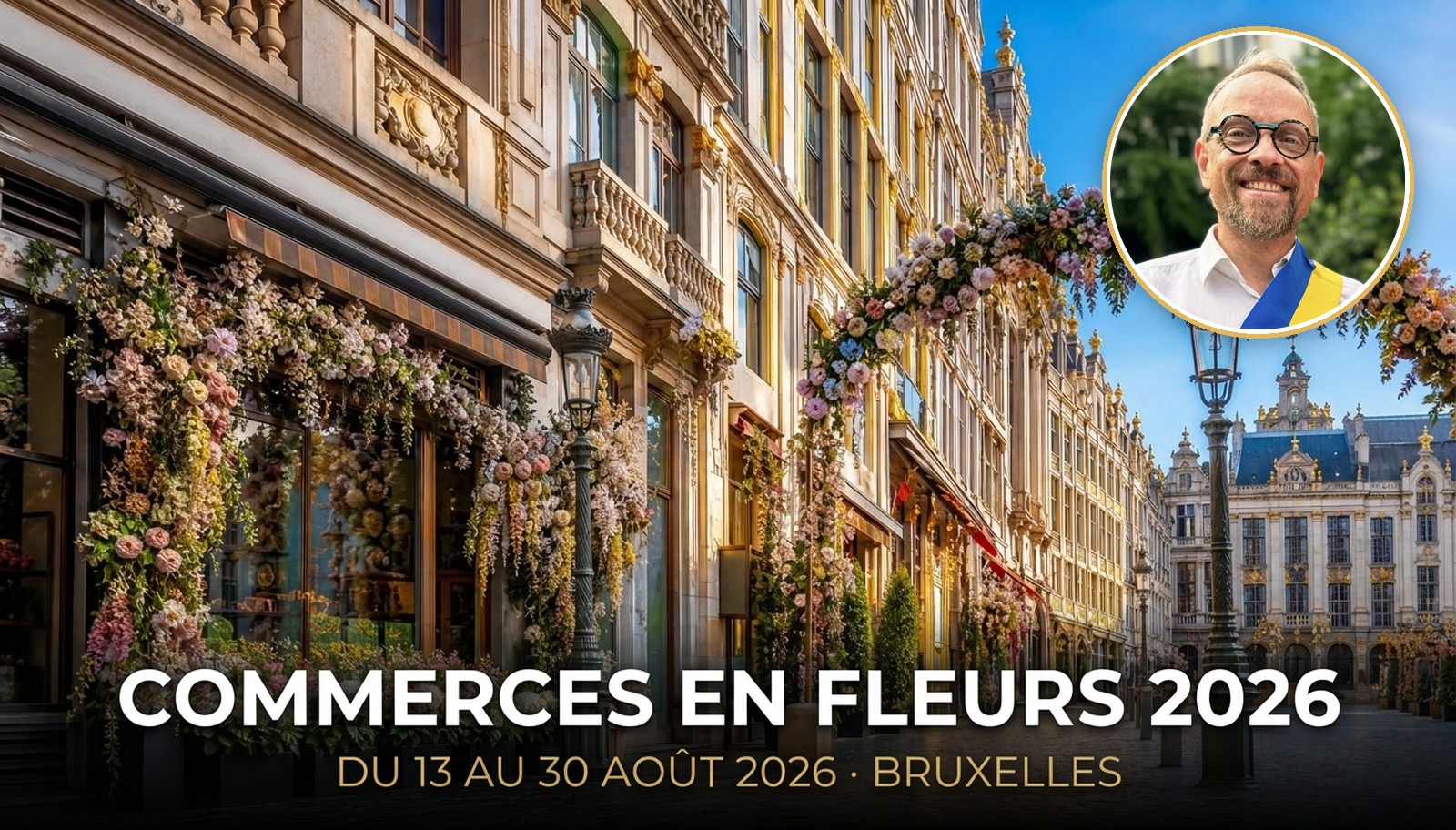
In FrenchFrom 13 to 30 August 2026, the centre of Brussels will be transformed into a temporary garden. Didier Wauters, Alderman for Commerce, is launching the 6th edition of Flowering Shops: 22 floral installations, 50 Seventies-themed shop windows, and a 90-minute walk through the heart of the Pentagon.
AI assistance : Iris (google/gemini-2.5-flash)
Massage 168: A wellness oasis just steps from the Grand-Place
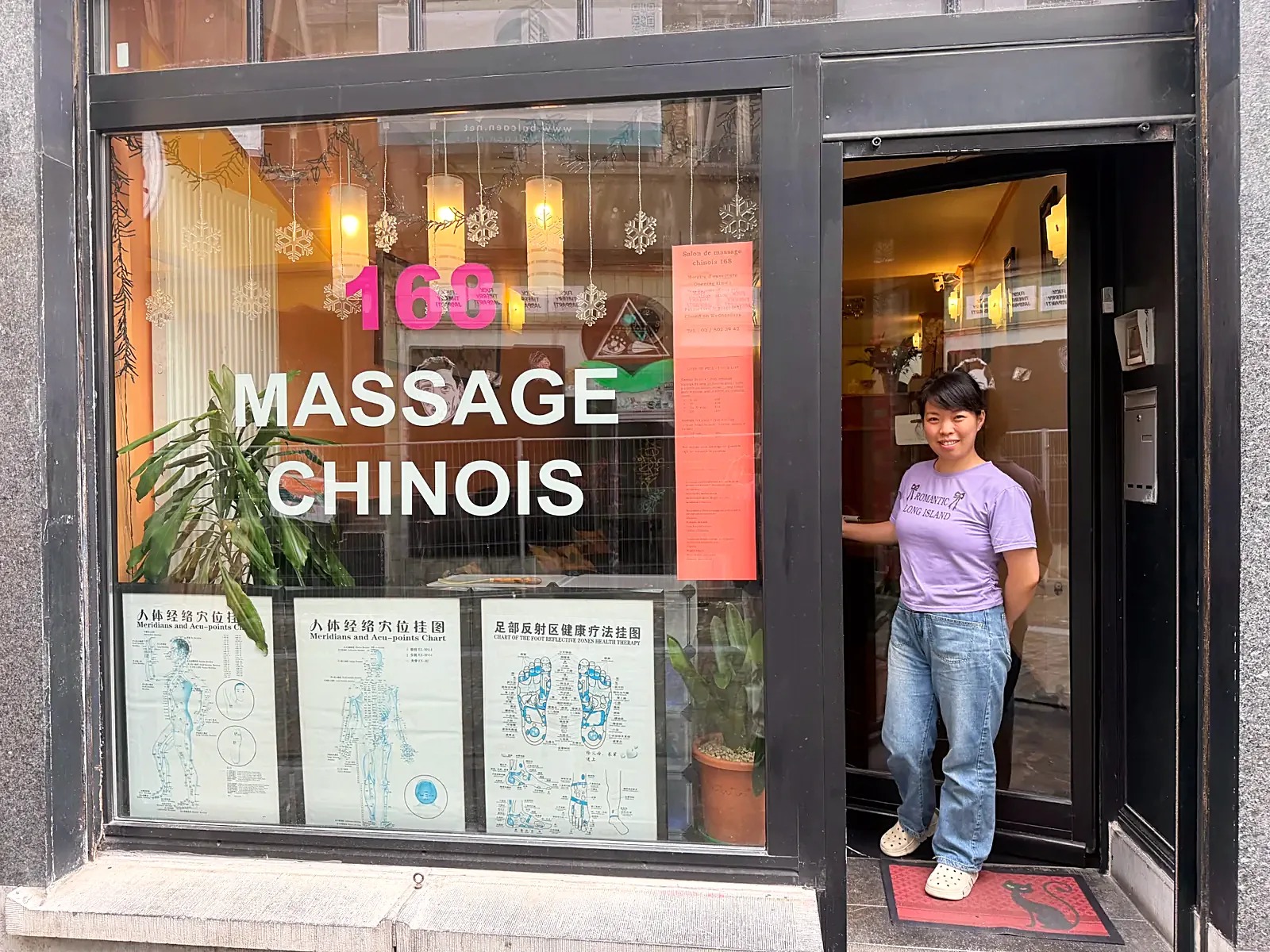
In FrenchJust 300 metres from the Grand-Place, Massage Chinois 168 has built a solid reputation on Rue des Chapeliers, with a 4.8/5 rating from 174 Google reviews, a welcoming atmosphere for all, and regulars who have been coming back for years.
AI assistance : Iris (google/gemini-2.5-flash)